
Augmented Reality: Beyond the Hype - Practical Applications and Future Prospects
5 min read
17 Apr 2026
 By Prince Matthews
Welcome to the world of Augmented Reality (AR), where digital information blends seamlessly with the physical world to create immersive experiences. Beyond the hype, AR holds tremendous potential for practical applications across various industries, from education and healthcare to retail and entertainment. In this article, we'll explore the practical applications of AR, its current state, and future prospects.
Understanding Augmented Reality
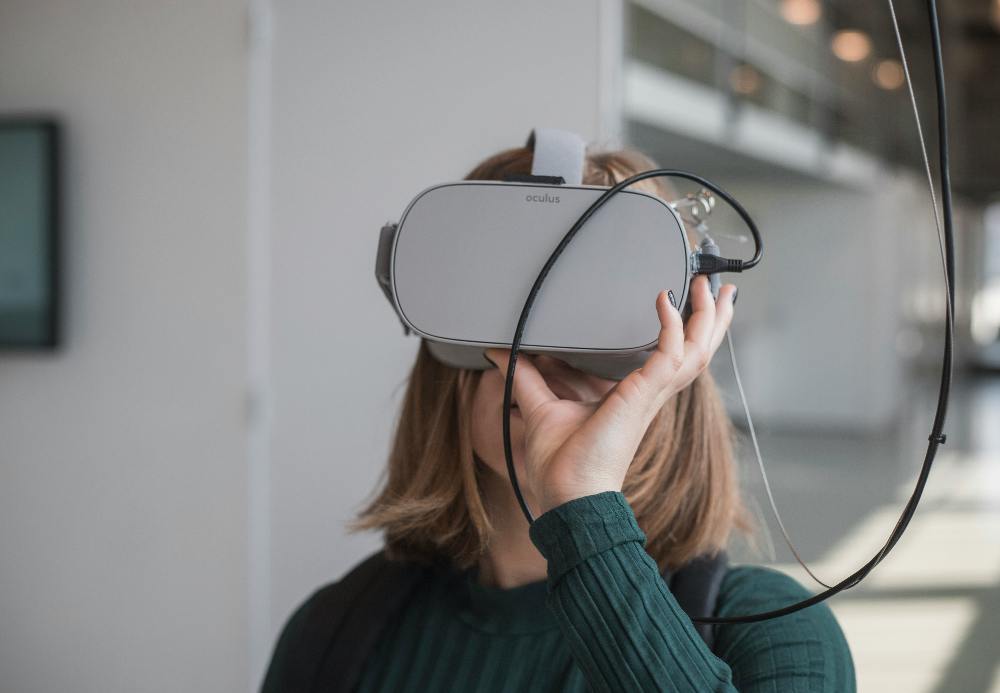
Augmented Reality overlays digital content, such as images, videos, or 3D models, onto the user's view of the real world, enhancing their perception and interaction with their environment. Unlike Virtual Reality (VR), which immerses users in entirely digital environments, AR integrates virtual elements into the physical world in real-time.
Practical Applications of AR
AR has practical applications across diverse sectors, including: 1. Education: AR enhances learning experiences by providing interactive and immersive educational content, such as virtual tours, simulations, and 3D models, fostering engagement and comprehension. 2. Healthcare: AR facilitates medical training, surgical planning, and patient education by overlaying medical imaging data, anatomical models, and diagnostic information onto the surgeon's field of view, improving precision and outcomes. 3. Retail: AR enables virtual try-on experiences, product visualization, and interactive shopping experiences, allowing consumers to preview products in their physical environment before making purchasing decisions.
Current State and Future Prospects
While AR technology has made significant strides in recent years, challenges such as hardware limitations, content creation complexity, and user adoption barriers remain. However, ongoing advancements in AR hardware, software, and content development are driving innovation and expanding the scope of AR applications.
Future prospects for AR include: 1. Wearable AR Devices: The development of lightweight, wearable AR glasses and headsets will enable hands-free AR experiences, increasing convenience and accessibility for users across various contexts. 2. Spatial Computing: AR technologies are evolving towards spatial computing, where virtual objects interact seamlessly with physical environments, enabling new forms of collaboration, communication, and productivity. 3. AR Cloud: The emergence of AR cloud platforms will create shared, persistent digital layers that overlay the physical world, facilitating location-based AR experiences and enabling seamless information sharing and collaboration.
Conclusion
In conclusion, Augmented Reality offers practical applications that extend beyond the initial hype, transforming how we learn, work, shop, and interact with the world around us. As AR technology continues to evolve, its future prospects are bright, with innovations in wearable devices, spatial computing, and AR cloud platforms poised to unlock new opportunities for immersive experiences and enhanced productivity.
FAQs
More Articles

Blockchain for Entrepreneurs: Building the Future of Business
4 min read | 20 Apr 2026

The Privacy Paradox: Balancing Security with Transparency in Blockchain
4 min read | 19 Apr 2026

Is Blockchain the Key to Unlocking the Sharing Economy's True Potential?
4 min read | 18 Apr 2026

From Paper Trails to Permanent Records: How Blockchain is Changing History
4 min read | 17 Apr 2026
More Articles
How AI is Enhancing Video Games: Creating Smarter NPCs and Dynamic Worlds
5 min read | 01 Jun 2026

The Role of AI in Drug Discovery: Speeding Up Breakthroughs
5 min read | 31 May 2026

AI in E-Commerce: Revolutionizing Customer Experience and Logistics
7 min read | 30 May 2026

The Impact of Deep Learning on Natural Language Processing (NLP)
7 min read | 29 May 2026