
Exploring the Real-World Applications Driving the Growth of Immersive Technology
10 min read
09 Jun 2026
 By Prince Matthews
Immersive technologies—including virtual reality (VR), augmented reality (AR), and mixed reality—are moving beyond entertainment and becoming practical tools across industries. From workforce training and healthcare simulations to retail visualization and engineering design, organizations are adopting immersive platforms to improve efficiency and decision-making. Understanding these real-world applications reveals why immersive technology is steadily gaining traction across the U.S. economy.
Understanding Immersive Technology in a Practical Context

Immersive technology refers to digital systems that create interactive environments where users can explore, manipulate, or visualize information in three dimensions. The most widely used formats include virtual reality (VR), augmented reality (AR), and mixed reality (MR).
Rather than simply presenting information on screens, immersive platforms place users inside digital environments or layer digital objects onto the physical world. This interaction changes how people understand complex information and practice real-world tasks.
In recent years, immersive technology has moved beyond experimental projects into practical applications across business, healthcare, education, and retail. Research firm IDC estimates that global spending on AR and VR solutions will exceed tens of billions of dollars annually within the next few years, with enterprise adoption representing a large portion of the market.
What makes immersive technology notable is not just its novelty but its usefulness. Companies increasingly deploy immersive platforms to solve practical problems—improving employee training, reducing operational risks, and helping customers make better purchasing decisions.
Workforce Training: Simulating Real-World Scenarios
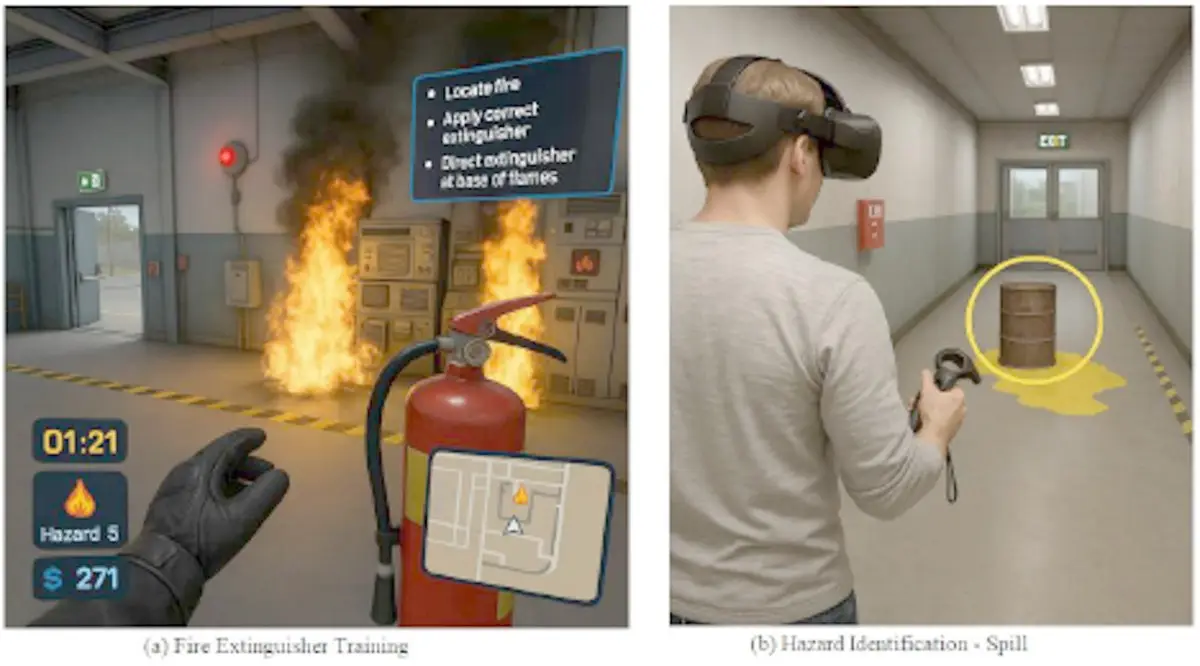
One of the most widely adopted applications of immersive technology is professional training. Industries with complex procedures or safety risks benefit significantly from simulation-based learning.
Traditional training often involves manuals, lectures, or supervised practice. Immersive simulations allow employees to rehearse tasks in controlled digital environments before performing them in real workplaces.
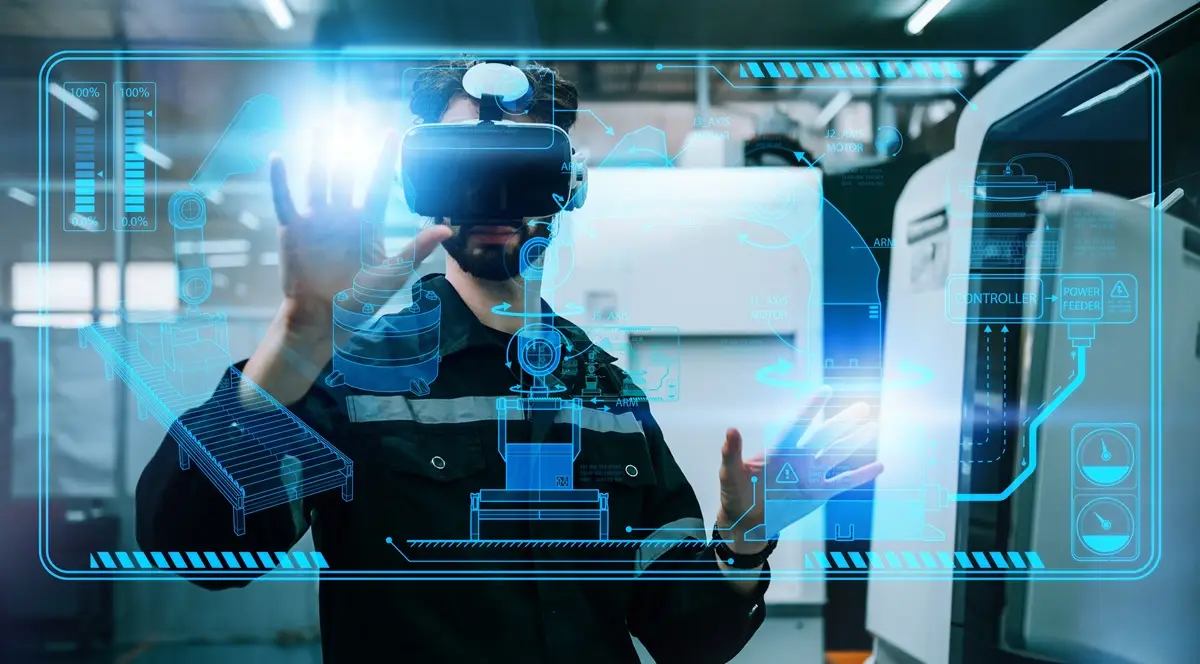
For example, manufacturing companies frequently use VR training programs to teach workers how to operate heavy machinery. Trainees can practice procedures repeatedly without risking equipment damage or workplace injuries.
Organizations implementing immersive training often report several practical benefits:
Employees learn complex procedures more quickly through hands-on interaction Workers retain information more effectively compared with lecture-based training Businesses reduce training costs associated with physical equipment and travel Simulated environments improve preparation for emergency scenarios
Large companies such as Walmart, UPS, and Boeing have experimented with immersive training platforms for warehouse operations, aviation maintenance, and safety protocols.
Research from PwC found that employees trained with VR can complete learning modules significantly faster than traditional classroom methods while demonstrating improved confidence when performing tasks.
Healthcare: Training, Planning, and Patient Care
Healthcare organizations represent another important area of immersive technology adoption. Hospitals and medical schools increasingly rely on digital simulations to support both clinical education and treatment planning.
Medical training traditionally requires access to specialized equipment, laboratories, and supervised clinical practice. Immersive simulations allow students to practice procedures in realistic digital environments that replicate operating rooms or emergency departments.
Examples of healthcare applications include:
Surgical simulations that allow medical students to rehearse complex procedures 3D visualization of patient anatomy before operations Emergency response simulations for hospital staff VR environments designed to reduce patient anxiety during treatments
Some hospitals have also introduced VR experiences for pain management. In certain treatments, immersive environments can help distract patients during procedures such as burn care or chemotherapy sessions.
Research published in medical journals suggests that immersive VR experiences can reduce perceived pain levels and stress in specific clinical contexts. While these applications continue to be studied, early results indicate that immersive tools may complement traditional treatment approaches.
Retail and E-Commerce: Visualizing Products Before Purchase
Retailers are increasingly adopting immersive tools to address one of the biggest challenges in online shopping: uncertainty about how products will look or function in real life.
Augmented reality has become particularly useful in this area because it allows consumers to visualize products directly within their homes.
Common retail applications include:
Furniture retailers allowing customers to place virtual couches or tables in their living rooms Beauty brands offering virtual makeup try-on tools through smartphone cameras Home improvement stores providing AR tools for paint colors or décor visualization Automotive brands creating digital showrooms for exploring vehicle interiors
These tools help bridge the gap between online convenience and the tactile experience of physical stores.
Retail analysts have observed that immersive product visualization can increase consumer confidence and reduce return rates—an important cost factor for many e-commerce businesses.
Many AR experiences work directly on smartphones, which has helped accelerate adoption because consumers do not need specialized hardware.
Engineering, Architecture, and Product Design
Immersive technology is also transforming how companies design and evaluate physical products and infrastructure.
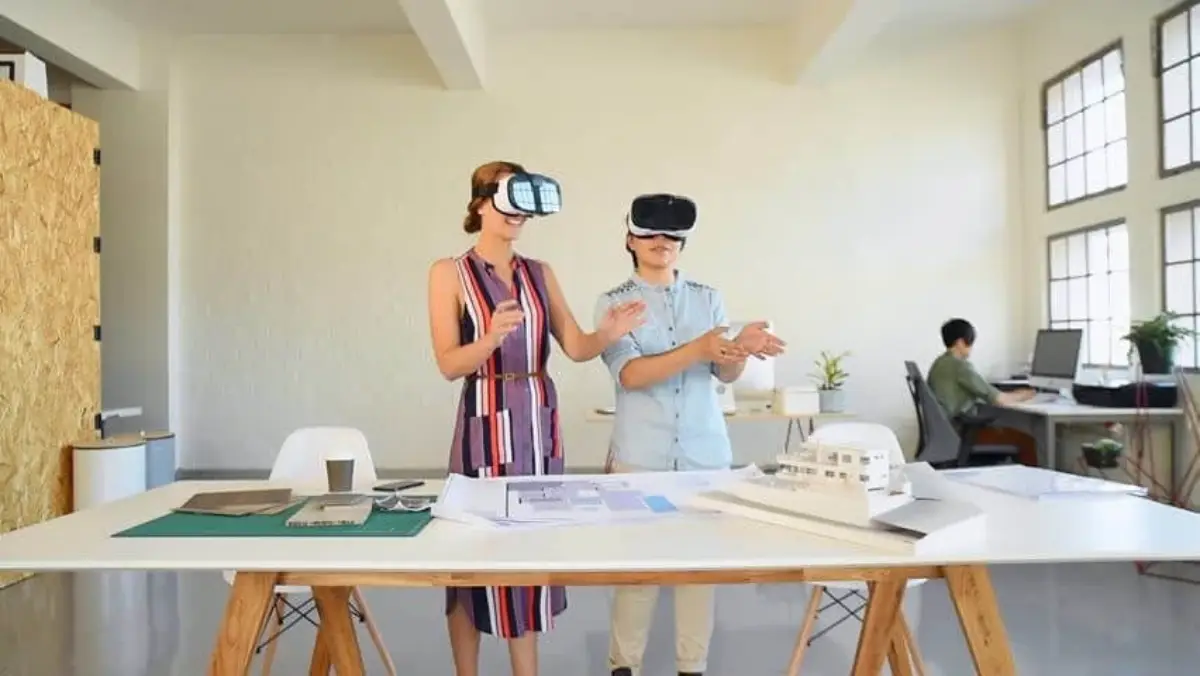
In engineering and architecture, professionals frequently rely on complex digital models to visualize structures before construction begins. VR and mixed reality tools allow designers to experience these models at full scale.
Instead of reviewing blueprints on a computer screen, teams can walk through digital buildings, inspect mechanical systems, and identify potential design issues early in the development process.
Key advantages of immersive design tools include:
Improved visualization of complex structures Better collaboration among distributed teams Early detection of design conflicts or spatial limitations More effective communication with clients and stakeholders
Automotive manufacturers, aerospace companies, and construction firms have begun integrating immersive platforms into their design workflows.
For instance, automotive engineers may evaluate interior layouts using VR to ensure ergonomic comfort before manufacturing physical prototypes.
Education: Making Complex Concepts Easier to Understand
Educational institutions across the United States are exploring immersive learning as a way to improve student engagement and comprehension.
Some subjects involve spatial relationships or processes that are difficult to visualize through textbooks alone. Immersive environments allow students to explore these concepts interactively.
Examples of immersive learning applications include:
Virtual science labs where students conduct experiments safely Historical simulations that recreate ancient civilizations 3D anatomy exploration in biology courses Engineering design environments for prototyping projects
Universities experimenting with immersive learning tools often report higher levels of student engagement. Students who interact directly with digital models may develop a deeper understanding of complex subjects.
While immersive education remains an emerging field, many educators view it as a supplement to traditional teaching methods rather than a replacement.
Remote Collaboration and the Future of Work
The growth of hybrid and remote work has prompted companies to explore new ways for teams to collaborate digitally. Immersive collaboration platforms allow employees to interact with digital objects and shared environments in real time.
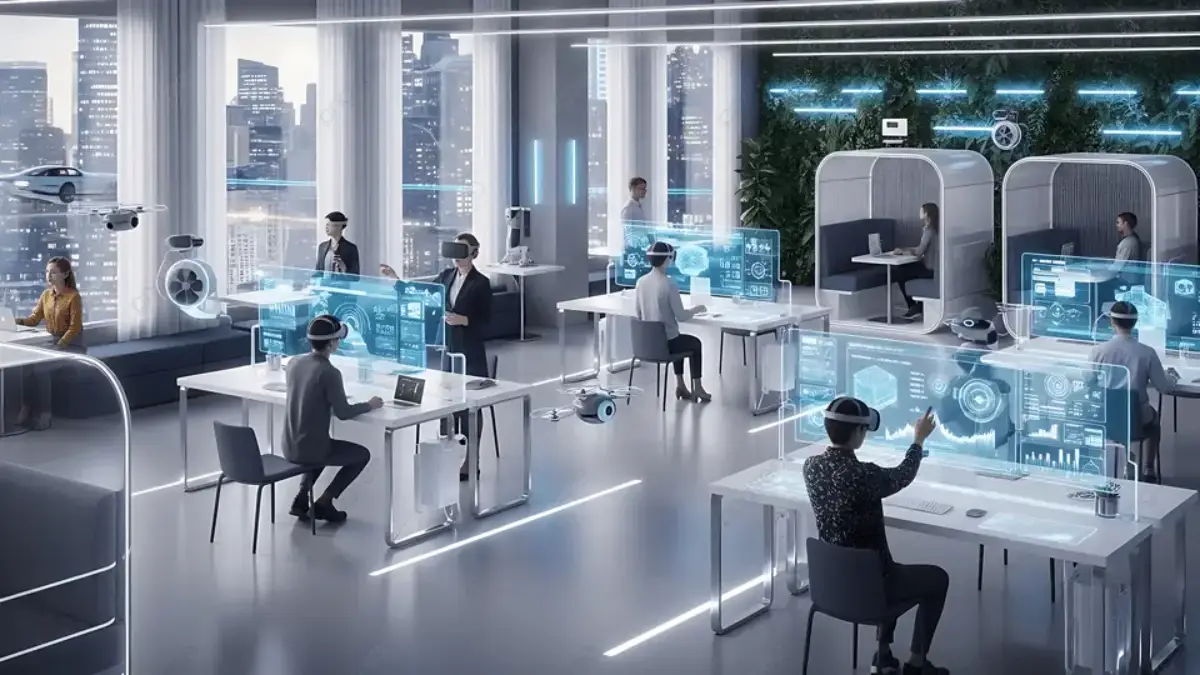
Instead of meeting through traditional video calls, teams can enter virtual workspaces where they examine 3D models, analyze data visualizations, or conduct training sessions together.
Industries such as engineering, product design, and construction benefit particularly from these environments because they involve spatial information that is easier to understand visually.
As immersive platforms evolve, they may become one of several tools organizations use to support distributed teams.
Why Businesses Are Investing in Immersive Platforms
Several factors explain why immersive technology adoption continues to grow.
Advances in hardware have made VR headsets lighter and more affordable. Smartphones now support powerful AR applications, eliminating the need for specialized equipment in many use cases.
Other drivers of adoption include:
Increasing computing power and graphics capabilities Expansion of 5G networks supporting real-time data processing Growing availability of immersive software development tools Demand for more engaging digital experiences
Rather than replacing traditional digital tools, immersive platforms often complement existing systems. Businesses typically integrate immersive environments alongside established workflows.
Frequently Asked Questions
What is immersive technology? Immersive technology refers to digital systems—such as virtual reality, augmented reality, and mixed reality—that allow users to interact with digital environments in ways that simulate real-world presence.
What industries use immersive technology the most? Industries with strong adoption include healthcare, manufacturing, retail, education, architecture, engineering, and workforce training.
How does immersive technology help businesses? Companies use immersive platforms to improve training, visualize complex designs, collaborate remotely, and create more interactive customer experiences.
Is immersive technology expensive to implement? Costs vary depending on the application. Many AR tools work directly on smartphones, while more advanced VR systems may require specialized hardware.
Do consumers use immersive technology in everyday life? Yes. Many shoppers already use AR tools to preview furniture, try on cosmetics, or explore products before purchasing online.
Can immersive technology improve workplace safety? Yes. Simulation-based training allows employees to practice hazardous procedures safely before performing them in real environments.
How is immersive technology used in healthcare? Healthcare providers use immersive tools for surgical planning, medical training, patient education, and certain forms of pain management.
Is immersive learning effective for students? Many studies suggest immersive learning environments increase engagement and help students better understand complex spatial or scientific concepts.
Will immersive technology replace traditional computing devices? Most experts believe immersive tools will complement existing devices such as smartphones and laptops rather than replace them entirely.
When Digital Experiences Become Practical Tools
Immersive technology is gradually shifting from experimental novelty to practical digital infrastructure. Businesses, educators, healthcare professionals, and retailers are finding ways to apply immersive tools to real problems—from workforce training and product design to customer experience and medical education.
The growth of immersive platforms reflects a broader trend in computing: digital information is becoming more interactive, visual, and experiential.
As hardware continues to improve and software ecosystems mature, immersive technology will likely expand into additional industries. For many organizations, the question is no longer whether immersive tools are useful—but how they can be integrated effectively into existing workflows.
Signals That Immersive Technology Is Becoming Mainstream
Companies are using VR simulations to train employees safely and efficiently Hospitals are exploring immersive tools for medical education and patient care Retailers are adopting AR visualization to improve online shopping experiences Engineers and architects rely on immersive design platforms to evaluate complex projects Universities are experimenting with immersive environments for interactive learning Advances in hardware and connectivity are accelerating adoption across industries
FAQs
More Articles

Geospatial Technology: Mapping the Future
7 min read | 12 Apr 2026
Fleet Management: The Secret to Efficient Operations
4 min read | 11 Apr 2026

Logistics Technology: The Innovations You Can't Afford to Ignore
4 min read | 10 Apr 2026
Digital Supply Chain: The Future of Logistics and Distribution
4 min read | 09 Apr 2026
More Articles

The Big Tech Twist: How VR Is Set to Disrupt Blockchain Like Never Before!
6 min read | 08 Jun 2026
Unlocking the Power of AR: How Augmented Reality Is Set to Revolutionize Blockchain!
6 min read | 07 Jun 2026
AI and Blockchain: The Surprising Ways They’re Set to Transform the Tech World in 2024!
5 min read | 06 Jun 2026

How Blockchain Could Revolutionize VR Gaming – The Game-Changing Innovation You Need to Know About!
7 min read | 05 Jun 2026